


Why Your Business Needs an Automated Email Marketing Strategy Now
An automated email marketing strategy uses personalized, trigger-based emails to nurture leads and drive conversions without manual effort. It’s a system that works 24/7 to grow your business.
Key Components of an Automated Email Marketing Strategy:
- Trigger-based messaging: Emails sent based on customer actions.
- Audience segmentation: Grouping contacts for personalized content.
- Workflow automation: Pre-built sequences that guide the customer journey.
- Performance tracking: Measuring key metrics to optimize results.
- Personalization: Using dynamic content to meet individual needs.
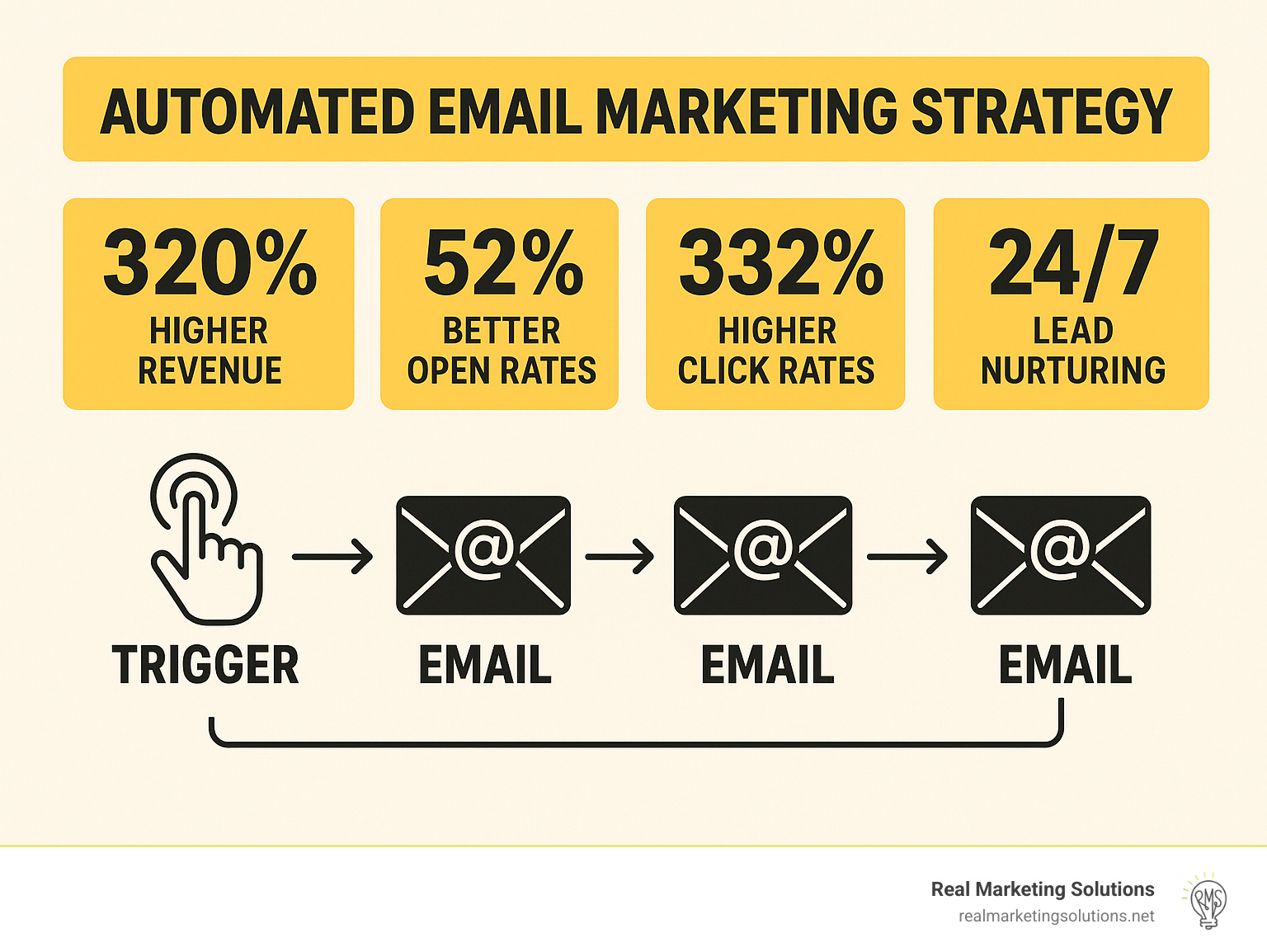
For busy owners of service-based businesses, time is the most valuable asset. Manual email marketing is time-consuming, but automation is a game-changer. The numbers prove it: automated emails can generate 320% more revenue than non-automated ones, and businesses using automation generate twice as many leads.
This strategy allows you to create meaningful connections at scale, delivering the right message to the right person at the right time—something generic email blasts can’t do.
The Foundations of Email Automation: More Than Just Sending Emails
Email automation is like a 24/7 marketing assistant that uses smart, responsive communication reacting to what your customers do. For example, when a user visits your mortgage calculator page multiple times, automation can trigger a helpful follow-up email. This is the core of trigger-based messaging—emails that fire based on real customer behavior, not just a calendar date.
By using behavioral targeting, you can create different content paths for different people. First-time homebuyers receive mortgage basics, while real estate investors get information on portfolio loans. This process of building relationships over time is called lead nurturing. It keeps your business top-of-mind with relevant content, which is why automated emails generate 320% more revenue than traditional email blasts. Paired with great content marketing, this approach feels helpful, not pushy.
What’s the Difference? Automation vs. Drip Campaigns vs. Traditional Email
| Type | How It Works | Personalization Level |
|---|---|---|
| Traditional Email | Manual sending, one message to all | Low |
| Drip Campaigns | Time-based, pre-scheduled sequence | Generic |
| Automated Email | Behavior-triggered, real-time response | Hyper-personalized |
In short, traditional email is a megaphone, a drip campaign is a scripted monologue, and automated email marketing is a personal conversation that adapts to each individual’s actions and interests.
The Core Benefits of Automating Your Email Marketing
Implementing an automated email marketing strategy offers more than just time savings:
- Increased efficiency: Your marketing works around the clock, handling follow-ups consistently.
- Scalable personalization: Create customized experiences for thousands of contacts at once.
- Improved customer retention: Relevant, helpful content builds trust and keeps you top-of-mind.
- Higher engagement rates: Relevant emails get more opens and clicks. Businesses using automation generate twice as many leads because their messages resonate.
- Improved customer experience: Prospects receive timely information, making them feel understood and valued. This aligns with modern strategies for building strong customer relationships, as detailed in our guide on five ways to improve customer experience with AI marketing.
The Foundations of Email Automation: More Than Just Sending Emails
Think of email automation as your marketing team’s smartest assistant, sending the right message at the right moment. For instance, when a potential homebuyer downloads your “First-Time Buyer’s Guide,” they can automatically receive a welcome email, followed by tips on mortgage pre-approval a few days later. This all happens without you lifting a finger.
This is behavioral targeting in action—responding to what people do. It relies on trigger-based messaging, where a specific user action (like downloading a guide) triggers a pre-defined email sequence. This transforms lead nurturing from a manual chore into an efficient, always-on system. The results are significant, as automated emails can generate 320% more revenue than traditional blasts. Our expertise in content marketing ensures every automated email provides genuine value.
What’s the Difference? Automation vs. Drip Campaigns vs. Traditional Email
Understanding the distinction is key to your marketing success:
| Type of Email Marketing | Characteristics | Key Features |
|---|---|---|
| Traditional Email | Manual, One-to-many | Mass newsletters, one-off promotions, generic feel. |
| Drip Campaigns | Time-based, Pre-scheduled | A fixed series of emails sent on a schedule, regardless of user behavior. |
| Automated Email | Behavior-triggered, Real-time | Emails sent based on specific user actions, with highly relevant, dynamic content. |
Traditional email is shouting to a crowd, drip campaigns are a scripted speech, and automated email marketing is a personal conversation. If a user clicks on VA loans, the next email focuses on VA loan benefits—it’s responsive and powerful.
The Core Benefits of Automating Your Email Marketing
- Increased efficiency: Automation handles repetitive follow-ups, freeing your time for high-level strategy.
- Scalable personalization: Deliver customized messages to thousands of contacts. A high percentage of consumers say they only engage with personalized messaging.
- Improved customer retention: Consistent, relevant contact through post-purchase sequences and anniversary emails keeps you top-of-mind.
- Higher engagement rates: Emails are more relevant, leading to better open and click rates.
- Improved customer experience: Automation delivers the timely confirmations and helpful content that modern customers expect, which aligns with our guide on five ways to improve customer experience with AI marketing.
- More leads: Businesses using automation generate twice as many leads because of consistent, effective nurturing.
Building Your Automated Email Marketing Strategy: A Step-by-Step Guide
An effective automated email marketing strategy requires a solid blueprint. It’s about creating intelligent workflows that use customer data, triggers, and actions to achieve your business goals 24/7. This approach is an essential part of any effective digital marketing plan.
Step 1: Define Your Goals and KPIs
Before automating, know what you want to achieve. Are you aiming for lead generation, better customer onboarding, or higher sales conversion? Each goal requires a different strategy and different Key Performance Indicators (KPIs). For example, a mortgage broker might track application completion rates. Clear goals provide a roadmap for success and make it easier to track the right conversion rates. Our experience shows that clear objectives yield better results.
Step 2: Segment Your Audience for Maximum Relevance
Sending the same email to everyone is ineffective, as most consumers only engage with personalized messaging. Smart segmentation involves dividing your contacts into smaller groups based on:
- Demographics: Location, age, or income.
- Purchase history: First-time vs. repeat clients.
- Website behavior: Pages visited or content downloaded.
- Engagement level: How often they interact with your emails.
Proper segmentation makes your emails feel like helpful advice, turning prospects into warm leads. This is also a cornerstone of successful digital marketing lead-generation strategies.
Step 3: Map the Customer Journey and Identify Key Touchpoints

Understanding the customer journey helps you deliver the right message at the right time. Key stages include:
- Awareness: The customer realizes a need. Offer educational content.
- Consideration: They are researching options. Provide detailed guides and comparisons.
- Purchase: They are ready to act. Use emails to address final concerns.
- Retention & Advocacy: Post-purchase follow-up to build loyalty and encourage referrals.
Step 4: Design and Build Your Automated Workflows
Modern email platforms use visual builders to create workflows with if/then logic and time delays. For example: IF a user downloads a guide, THEN send a follow-up email 24 hours later. You can even use A/B testing to optimize subject lines or content.
Each workflow needs a clear goal, like scheduling a consultation. Once the goal is met, the contact should exit the sequence. Every email must have a strong call to action to guide users to the next step. Once set up, these workflows become a tireless assistant, nurturing leads 24/7.
10 Powerful Automated Email Campaigns to Drive Growth
Here are 10 essential automated email campaigns we implement for our clients in mortgage, finance, real estate, and other service-based businesses to drive consistent growth:
1. The Welcome Series: Make a Strong First Impression
When someone subscribes to your list, they are highly engaged. A welcome series is your chance to make a great first impression. Most people expect a welcome email, and these messages get significantly more reads and clicks than regular marketing emails.
An effective welcome series should:
- Confirm the subscription and thank the new subscriber.
- Introduce your brand and what makes you unique.
- Set expectations for email frequency and content.
- Offer an incentive like a free guide or a consultation discount as a thank-you.
A thoughtful welcome series immediately starts building a strong customer relationship.
2. The Abandoned Cart/Inquiry Series: Recover Lost Opportunities
For service-based businesses, an “abandoned cart” could be an incomplete loan application or contact form. Since about 70% of online forms are abandoned before completion, this automated series is your secret weapon for recovering lost leads.
A prospect was interested enough to start the process; a gentle nudge can bring them back. A typical sequence includes:
- A gentle reminder: A friendly, helpful email sent within a few hours.
- Objection handling: A follow-up that addresses common concerns or questions.
- An incentive: A final email offering a small bonus for completion, like a waived fee or a free consultation.
This series can recover a significant percentage of lost opportunities by keeping the tone helpful and understanding, not pushy.
3. Post-Purchase & Transactional Emails: Build Trust and Upsell
After a client closes on a mortgage or completes a transaction, your communication shouldn’t stop. Post-purchase automation is key to building long-term trust and creating new opportunities.
Instead of a boring receipt, use transactional emails to:
- Confirm the service and reassure clients they made a great choice.
- Provide educational content that helps them maximize their investment (e.g., home maintenance tips or escrow information).
- Offer relevant cross-sell recommendations, such as insurance connections for a new homebuyer.
- Request feedback or reviews while they are most excited about your service.
Automating these touchpoints ensures every client receives a consistent, high-quality experience, which builds loyalty and can lead to future revenue.
4. Re-engagement & Win-back Campaigns: Reignite Interest
Some subscribers will inevitably become inactive. These contacts are valuable because they already know your brand. A win-back campaign can reignite their interest far more easily than acquiring a new lead.
The goal is to remind them of your value proposition. A good sequence might include:
- A personal “we miss you” message that acknowledges their absence.
- A compelling incentive or exclusive content to remind them what they’re missing.
- A short survey asking for feedback on why they disengaged.
If a subscriber remains inactive, a final email can gracefully remove them from your list. This cleans your list, improves deliverability, and shows respect for their inbox.
5. Birthday & Anniversary Emails: Delight and Personalize
Personalized celebration emails are a powerful way to build genuine connections. Remembering a client’s birthday or home purchase anniversary shows you see them as a person, not just a number.
For mortgage and real estate clients, celebrating a home purchase anniversary is particularly effective. A warm message, perhaps with a small gift like a home maintenance checklist, creates a lasting positive impression. A simple birthday greeting, perhaps with a special offer, also helps build loyalty.
These surprise-and-delight moments feel genuine and create stories clients might share. By automating these personal touches, you can strengthen relationships and stay top-of-mind for future business or referrals.
6. Lead Nurturing Series: Educate and Guide
Most prospects in high-consideration industries like finance and real estate aren’t ready to buy immediately. A lead nurturing series bridges this gap by delivering valuable educational content over time, building trust and positioning you as an expert.
When someone downloads a resource like a “First-Time Homebuyer’s Checklist,” they are signaling their needs. Your automated series can then deliver perfectly timed, relevant content, such as mortgage pre-approval tips, neighborhood guides, or market updates. This educational approach adds value without sales pressure.
Automation ensures this process is consistent, so no lead falls through the cracks. The series works 24/7 to build relationships, and smart triggers can identify when a prospect’s engagement signals they are ready for more direct outreach.
7. Educational/Instructional Series: Maximize Value
After a client closes on a home or finalizes a loan, an educational series can provide ongoing support and maximize the value of your service. This positions your business as a long-term, trusted advisor.
For new homeowners, you could send a series on essential home maintenance. For loan clients, you could explain how extra principal payments work or offer tips for improving their credit score. Timing is key—sending mortgage payment tips just before the first payment is due shows you are proactively thinking about their success.
This approach reassures clients they made the right choice and helps them feel confident in their decision. This ongoing support builds strong relationships that lead to referrals and repeat business.
8. VIP/Loyalty Program Communications: Reward Top Customers
Your best clients deserve a VIP experience, and automation makes it easy to deliver it consistently. A loyalty program nurtures your most valuable relationships, such as repeat mortgage clients or real estate investors.
When a client hits a specific milestone (e.g., a second property purchase), automation can trigger a sequence with exclusive perks. This can include:
- Exclusive offers, like special rates or priority scheduling.
- Early access to new loan programs or property listings.
- Special content, such as advanced market insights or exclusive webinars.
By using triggers to identify high-value clients automatically, you can make them feel like insiders, strengthening their loyalty and encouraging future business.
9. Feedback & Survey Requests: Improve and Understand
Customer feedback is invaluable, and automation helps you request it at the perfect moment—when the experience is fresh in a client’s mind. After a client closes on a home or secures a loan, they are often happy and willing to share their thoughts.
We recommend triggering a feedback request 24-48 hours after a service milestone. The key is to make it easy to respond, such as with a simple, single-click rating. This shows clients you value their opinion and provides you with crucial insights.
Positive feedback can be used as powerful testimonials and reviews to attract new clients. Constructive criticism gives you a chance to follow up and improve your service, turning a potential issue into a relationship-building opportunity.
10. Event-Triggered Communications: Timely and Relevant
The beauty of an automated email marketing strategy lies in its ability to respond to real-time events and behaviors. Event-triggered communications go beyond the typical purchase or sign-up scenarios, creating opportunities to connect with your audience when they’re most engaged and receptive.
Think about the mortgage professional who automatically sends a personalized follow-up email within hours of someone attending their “First-Time Homebuyer” webinar. Or the real estate agent whose system instantly notifies clients when new properties hit the market that match their saved search criteria. These aren’t just emails – they’re timely solutions delivered at exactly the right moment.
Webinar and Event Follow-ups represent some of the most powerful event-triggered opportunities. When someone invests their time attending your educational content, they’re showing serious interest. An automated sequence can immediately deliver the promised resources, answer common questions that came up during the session, and guide attendees toward the next logical step in their journey.
Appointment reminders and confirmations might seem basic, but they’re incredibly valuable for service-based businesses. Nobody wants to miss that important loan consultation or property showing. Automated reminders sent 24 hours and 2 hours before an appointment dramatically reduce no-shows while demonstrating professionalism.
For real estate professionals, property match notifications create an always-on concierge service. When new listings hit the market that match a client’s saved criteria – whether it’s a specific neighborhood, price range, or property type – automated emails ensure they’re among the first to know. This creates excitement and positions you as their go-to resource.
Market update triggers can automatically send relevant information when significant changes occur. If mortgage rates drop significantly, your automation can notify prospects who’ve been on the fence about refinancing. When a client’s neighborhood sees increased activity, they might appreciate knowing about recent sales or market trends.
The key to successful event-triggered communications is relevance and timing. Each email should feel like a natural, helpful response to something meaningful that just happened in your prospect’s or client’s journey.
Best Practices for Deliverability, Compliance, and ROI
Even the best automated email marketing strategy is useless if your emails land in the spam folder. When done right, however, the ROI of email marketing can be as high as 4200%. Achieving this requires a focus on deliverability, compliance, and optimization.
Key Components of a Winning Automated Email Marketing Strategy
- Personalization and Dynamic Content: Go beyond the first name. Use data to include relevant details like property types or loan information that match user interest.
- Mobile-Responsive Design: With 81% of individuals checking email on their phones, your emails must look great on any device.
- Clear Call-to-Action (CTA): Every email needs one clear, compelling CTA to guide the user to the next step.
- Compelling Subject Lines: Your subject line is the first impression. Craft it to spark curiosity and offer value.
How to Avoid the Spam Folder and Ensure Compliance
Protecting your sender reputation is crucial for deliverability. Always follow these rules:
- Use Opt-In Consent: Only email people who have explicitly asked to hear from you. Never buy email lists.
- Provide an Easy Unsubscribe: It’s required by laws like the CAN-SPAM ACT and GDPR, and it keeps your list healthy.
- Maintain a Good Sender Reputation: High open rates and low spam complaints tell service providers you’re sending valuable content.
Measuring the Success of Your Automated Email Marketing Strategy
Continuously monitor performance to optimize your strategy. Track these key metrics:
- Conversion Tracking: Are your emails leading to completed applications or consultations?
- Revenue Attribution: Which campaigns are generating the most income?
- Customer Lifetime Value (CLV): How does automation impact long-term client value?
- A/B Testing Results: Constantly test elements to improve performance.
- List Growth Rate: Are you attracting quality subscribers to feed your automation engine?
Frequently Asked Questions about Automated Email Marketing
Setting up an automated email marketing strategy can bring up a lot of questions. Here are answers to some of the most common ones we hear.
What essential features should I look for in an email automation tool?
Choose a platform that can support your strategy. Key features include a robust workflow builder for creating if/then logic, advanced segmentation capabilities, and seamless CRM integration. Also, ensure it has detailed analytics, A/B testing functionality, and pre-built templates to save you time.
How can I ensure my automated emails are personalized and not robotic?
The key is using dynamic content based on real user data and behavior. Segment your audience thoughtfully so messages are always relevant. For example, if someone clicks on an article about fixed-rate mortgages, a follow-up email on that topic feels helpful, not robotic. Finally, always write in a warm, human tone, avoiding corporate jargon.
What is the typical cost of email marketing automation?
Costs vary based on your number of subscribers and email volume, with plans ranging from free to several hundred dollars per month. However, the focus should be on the return on investment. Email marketing has an average ROI of $42 for every $1 spent. Automation saves you countless hours, making it a smart investment that pays for itself through lead generation and sales.
Conclusion: Put Your Marketing on Autopilot and Watch Your Business Grow
An automated email marketing strategy is no longer a luxury but a necessity for sustainable growth. It frees up your time from repetitive tasks, allowing you to focus on high-level strategy and client relationships.
Automation allows you to build meaningful, personalized relationships at scale. Imagine your lead nurturing running seamlessly 24/7, delivering the right message at the perfect moment. That is the power of automation.
The team at Real Marketing Solutions specializes in designing and implementing custom automation strategies for the mortgage, finance, and real estate industries. We turn complex marketing challenges into results-driven solutions. Ready to open up your marketing potential?
Subscribe to the Social Scoop
Receive regular news & updates in the world of social media marketing.
COMPANY ACCOLADES


Follow Us


