


Why Government Communication Feels Like a Foreign Language
Communication in public sector organizations often feels like navigating a maze of bureaucratic jargon, competing priorities, and complex stakeholder relationships. Yet effective government communication is the foundation of democratic society – it’s how citizens stay informed, policies get implemented, and public trust gets built or broken.
Here’s what you need to know about public sector communication:
Key Components:
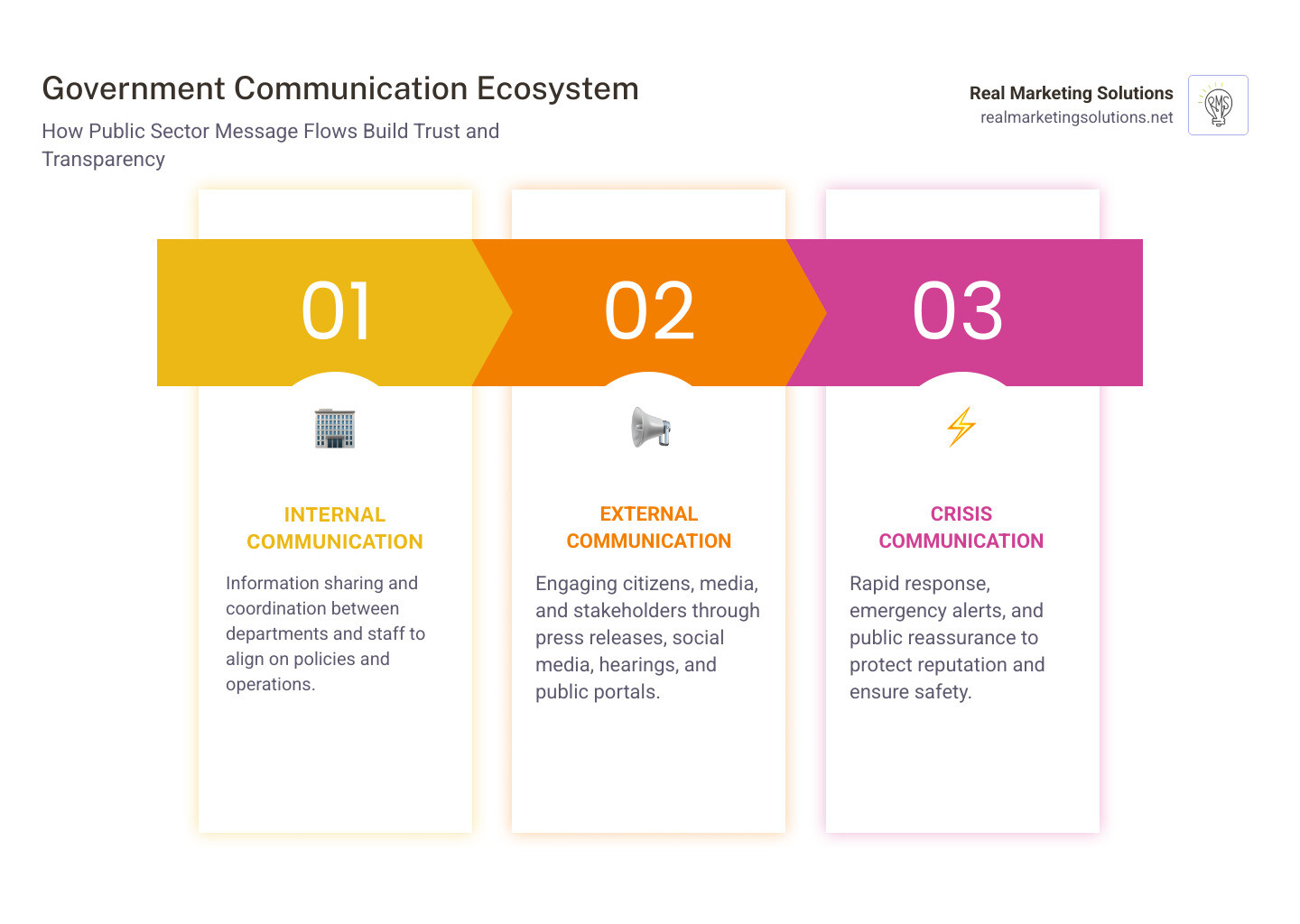
- Internal communication – coordination between departments, staff updates, policy memos
- External communication – press releases, public hearings, social media, citizen services
- Crisis communication – emergency alerts, reputation management, rapid response
- Strategic communication – long-term campaigns, behavior change, policy advocacy
Core Challenges:
- Multiple audiences with conflicting interests
- Legal constraints and transparency requirements
- Limited budgets but high accountability standards
- Political pressures and media scrutiny
Success Factors:
- Clear, plain-language messaging
- Multi-channel approach using digital and traditional media
- Consistent branding and messaging across departments
- Data-driven measurement and continuous improvement
The research shows that communication skills consistently rank in the top 10 sought-after abilities by employers globally. For government agencies, this skill gap is even more critical because poor communication directly impacts public trust, policy effectiveness, and democratic participation.
Unlike private sector marketing, government communication operates under unique constraints. You’re serving citizens who didn’t choose your “product,” using taxpayer money, and facing constant public scrutiny. Every message must balance transparency with sensitivity, speed with accuracy, and broad reach with personalized relevance.
Why Public Communication Matters
Public sector communication isn’t just about sharing information – it’s about building the foundation of democratic society. When citizens understand government policies, trust public institutions, and feel heard by their representatives, democracy functions better. When communication breaks down, we see declining civic engagement, policy failures, and erosion of public trust.
The stakes couldn’t be higher. Research shows that citizens increasingly expect “instantaneous access to information from and engagement with their governments.” This expectation has only intensified in our digital age, where private companies set the standard for responsive, personalized communication.
Democratic foundations of communication
At its core, government communication serves democratic principles. Citizens have a fundamental right to know what their government is doing, why decisions are made, and how policies affect their lives. This isn’t just good practice – it’s often legally mandated through freedom of information laws and transparency requirements.
The research reveals that “citizens and civil society organizations rely on governments to disseminate relevant information for informed decision-making.” Without effective communication, citizens can’t participate meaningfully in democratic processes like voting, public hearings, or policy consultations.
We’ve seen this principle evolve dramatically. What started as basic information dissemination has expanded into interactive dialogue. Modern government communication must create “platforms for public to voice opinions” and foster “dialogue and engagement at all levels.”
ROI of good communication
Effective government communication delivers measurable returns on investment. The data tells a compelling story:
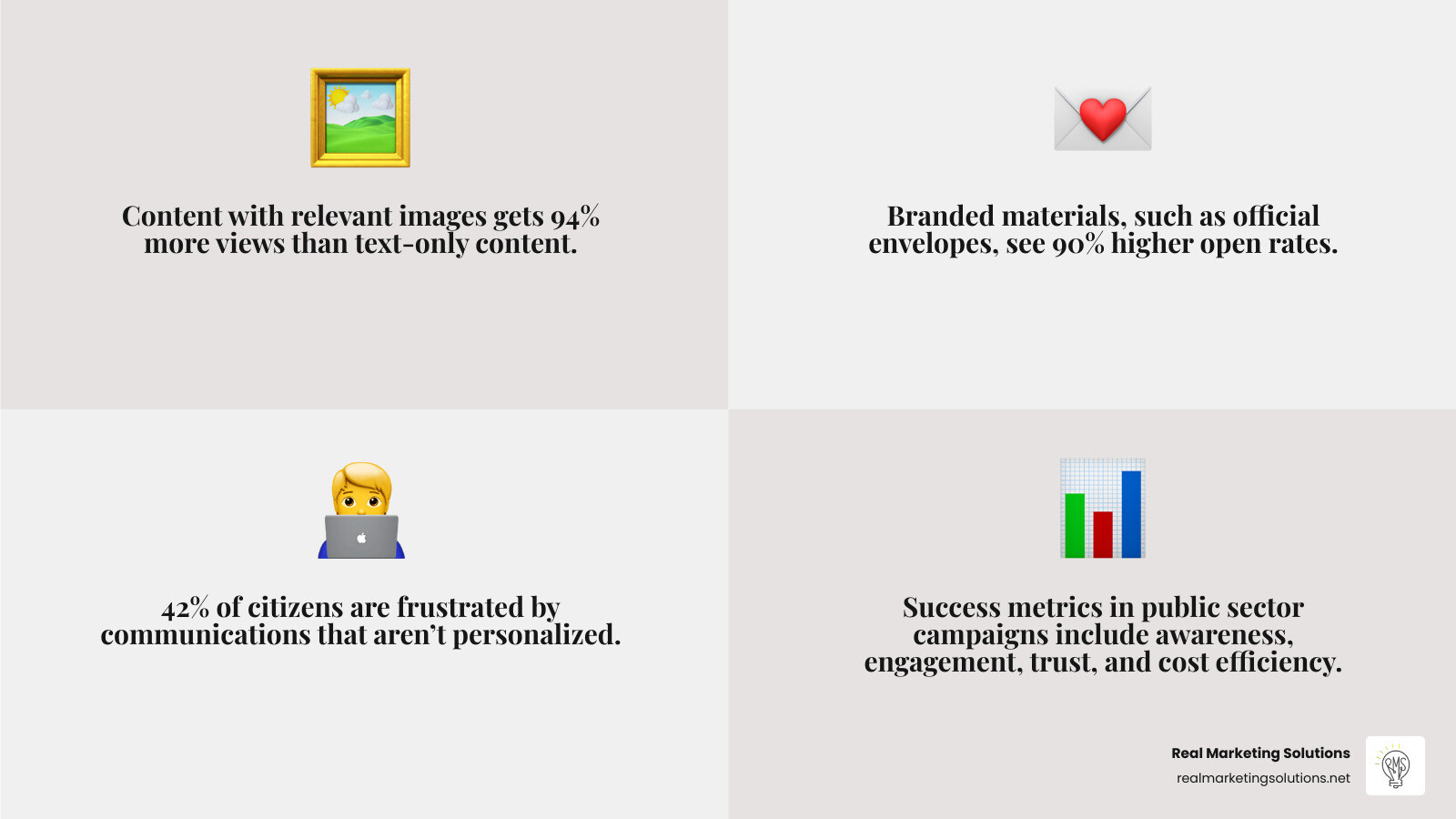
- Content with relevant imagery gets 94% more views than content without images
- 42% of people are frustrated by content that is not personalized, while 72% say they only engage with personalized messaging
- Envelopes with color and logos have a 90% higher open rate than plain white ones
- 69% of email recipients report emails as spam after reading the subject line alone
These statistics aren’t just marketing metrics – they represent real impact on policy adoption, citizen engagement, and public safety. When a health department’s flu vaccination campaign uses personalized messaging and relevant visuals, more people get vaccinated. When a city council uses clear, accessible language in budget documents, more residents participate in public hearings.
The research emphasizes that “communication is a key lever to raise awareness of open government reforms and drive behavior change.” This means every dollar invested in strategic communication can multiply into broader policy success and citizen satisfaction.
Types of communication in public sector explained
Think of communication in public sector as an orchestra: many instruments, one song. Agencies juggle different communication types at once, each with its own audience and goal.
Researchers group those activities into four overlapping principles — civic communication, management communication, reputation management and market communication. The mix explains why messages sometimes feel inconsistent: one post may seek transparency, the next may promote policy adoption. Different objectives, same agency.
| Communication Type | Primary Audience | Main Goal | Typical Tools |
|---|---|---|---|
| Internal | Staff & partners | Coordination | Memos, intranets, chats |
| External | Citizens & media | Information & engagement | Press releases, social, hearings |
| Crisis | Everyone | Safety & trust | Alerts, briefings, hotlines |
| Strategic | Target groups | Behaviour change | Campaigns, education, advocacy |
Internal communication
No strong external message survives weak internal flow. Lateral updates keep departments aligned, while bottom-up feedback lets frontline staff flag issues early. Digital workspaces, shared docs and dashboards have replaced endless email chains, but the goal is unchanged: the left hand must know what the right hand is doing.
External communication
This is where government meets citizen, so accuracy and timing matter. Press releases shape headlines, social media offers real-time dialogue, and public hearings turn one-way notice into two-way conversation. Open-data portals add transparency while reducing one-off information requests.
Crisis communication
When lives or reputations are at risk, clarity beats elegance. Pre-approved templates, a single source of truth and empathy-first language stop rumours before they spread. Agencies that plan, practise and review their crisis protocols bounce back faster.
Best Practices for Effective Communication
Getting communication in public sector right means balancing transparency, speed and inclusivity. The following quick-start list focuses on what consistently works.
Plan first, post second
- Define outcomes. What should people know, do or feel?
- Map stakeholders. Citizens, media, elected officials and staff need different details.
- Set SMART KPIs. Measure awareness, engagement and behaviour change – not vanity numbers.
Use the GCS eight-skills framework (ethics, strategy, workplace tools, collaboration, data, digital content, digital channels, disruption) as a checklist before launch.
Smart digital tactics
- Email still rules. Branded headers and honest subject lines reduce the 69 % “mark-as-spam” threat.
- Pick platforms with purpose. Facebook = community, Twitter = updates, Instagram = visual stories, LinkedIn = professional, TikTok = youth.
- Schedule, then stay flexible. A content calendar provides structure; leave 20 % open for breaking news.
- Meet accessibility standards. Alt text, captions and plain language keep information open to all.
Measure, learn, repeat
Look at outcomes first (vaccination uptick, permit applications completed), then supporting metrics (time on site, meaningful comments). Pair numbers with qualitative feedback from focus groups or social listening. Monthly scorecards and quarterly strategy tweaks create a true improvement loop.
Communicating through Change & Uncertainty
Shifts in policy, budgets or leadership are constant. Strong communication in the public sector keeps the ship steady when waves rise.

Build resilient channels
- Redundant platforms. Mix SMS, email, social media and local broadcasters.
- Interoperability. Ensure departments can share data instantly.
- Real-time dashboards. One glance tells decision-makers what citizens see.
- Audience segmentation. Seniors, commuters and business owners have different needs; target accordingly.
Case snapshots
- Pandemic response. Daily briefings, multilingual FAQs and myth-busting posts moved faster than rumours.
- Natural disasters. Prewritten alerts, automated reverse-911 calls and GIS maps guided evacuations.
- Participatory budgeting. SMS reminders and short explainer reels tripled resident voting on spending priorities.
Frequently Asked Questions about Government Communication
1. What unique constraints shape public communication?
Legal transparency, public record rules and multi-stakeholder scrutiny make messages slower to clear but richer in accountability. Private brands can pivot overnight; agencies must balance politics, law and equity every time they hit “send”.
2. How do you measure success in a government campaign?
- Awareness: Surveys or quick polls confirm people saw and understood the message.
- Engagement: Track comments, meeting attendance and call-back volume.
- Behaviour: Did vaccination, permit renewal or public-hearing turnout rise?
- Efficiency: Cost per contact and staff time prove good stewardship of tax dollars.
- Trust: Sentiment analysis and periodic opinion surveys show long-term impact.
3. When should crisis communication plans be updated?
Annually at minimum, plus any time you face a major incident, leadership shake-up, technology change or demographic shift. Review what worked, patch what didn’t, and keep contact lists current.
Communication in Public Sector Organizations
Whew! We’ve covered a lot of ground, haven’t we? From navigating bureaucratic jargon to mastering crisis communication, it might seem like communication in public sector organizations is a complex beast. But here’s the good news: it doesn’t have to feel like a foreign language.
At its heart, effective government communication boils down to a few simple, powerful truths. It’s about knowing who you’re talking to, crafting messages that are as clear as a sunny day, choosing the right way to share them, and then checking to see if they actually landed. It’s how we build trust, help policies succeed, and keep our democracies humming along.
Yes, there are unique challenges – balancing transparency with privacy, speed with accuracy, and serving everyone from passionate advocates to busy parents. But with every challenge comes an incredible opportunity to truly connect with citizens. When government agencies meet the growing expectation for responsive, personalized communication, it’s a win-win: better outcomes for policies and stronger public support.
Looking ahead, government communication will continue to evolve, becoming even more digital, data-driven, and wonderfully interactive. This means embracing future skills in areas like data analysis and digital content creation. It also calls for an adaptive mindset – being ready to pivot, learn, and innovate as new tools and challenges emerge. As our research showed, communication isn’t just part of change; it’s critical to its success.
It’s about empowerment. Clear, accessible communication empowers citizens to make informed decisions, participate actively, and feel truly connected to their government. And throughout it all, upholding high ethical standards – ensuring transparency, accuracy, and inclusivity – remains our compass.
Ready to transform your agency’s communication from a bureaucratic necessity into a true strategic advantage? At Real Marketing Solutions, we get it. We understand the unique world of government agencies, with all its nuances and requirements. Our team is here to help you develop those smart communication plans, bring your digital engagement ideas to life, and measure the real-world impact that truly matters for public sector objectives.
Whether you’re rolling out a big new policy, navigating a tricky situation, or simply aiming for better citizen engagement, powerful communication is your bedrock. The insights and best practices we’ve shared throughout this guide aren’t just theory; they’re your roadmap to making every message count. Let’s make government communication not just effective, but truly inspiring.
Subscribe to the Social Scoop
Receive regular news & updates in the world of social media marketing.
COMPANY ACCOLADES


Follow Us


