


The New Search Landscape: What is Schema Markup and Why It’s Crucial for AEO
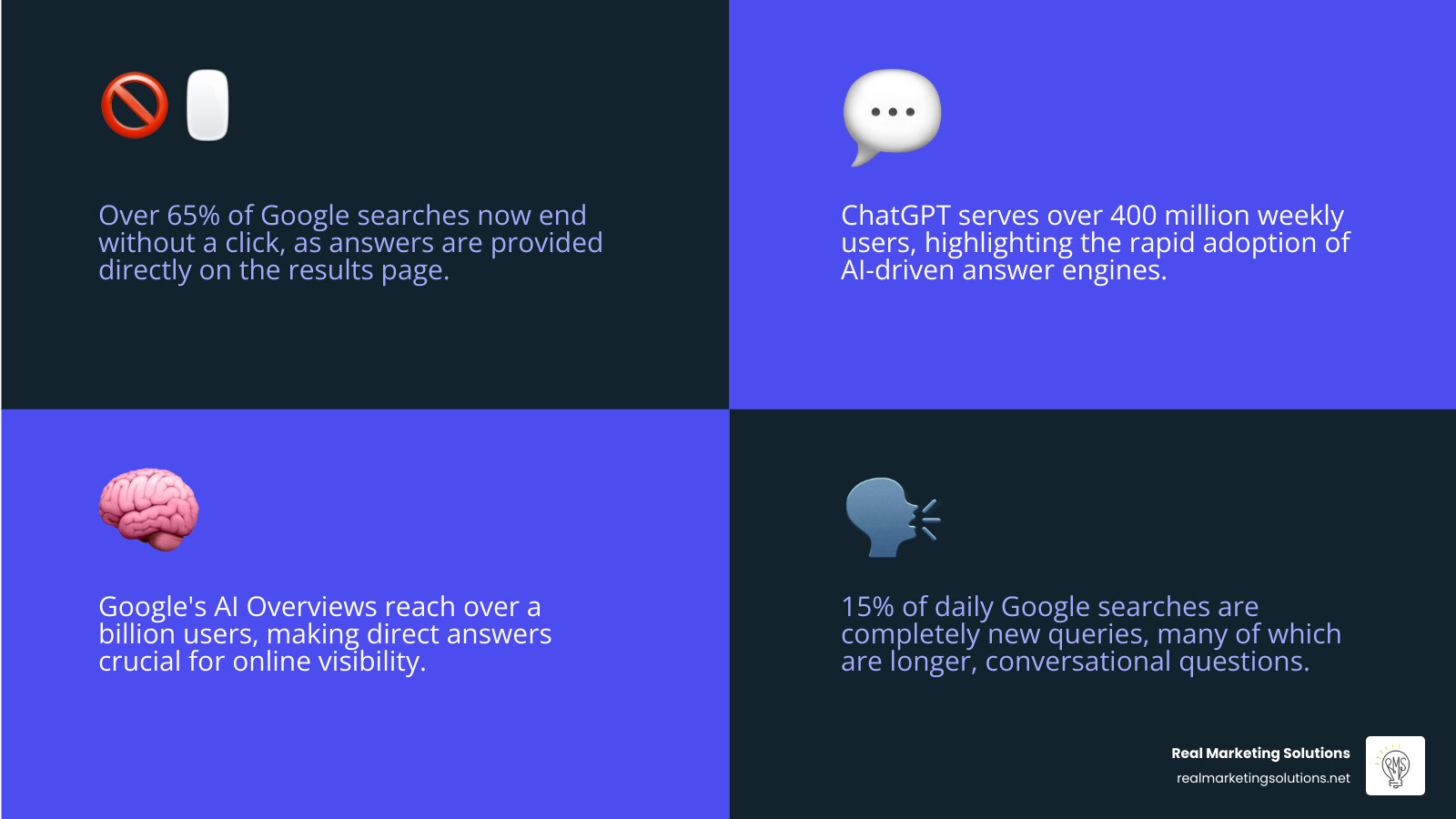
For businesses aiming to stay visible in today’s AI-driven search world, the question is no longer just about ranking, it’s about becoming the direct answer. With a majority of Google searches now ending without a click, Answer Engine Optimization (AEO) is critical.
Quick Answer: Implementing Schema Markup for AEO
- Choose the right schema type – Select from FAQPage, HowTo, Article, LocalBusiness based on your content.
- Use JSON-LD format – Google’s preferred structured data format.
- Add code to your HTML – Place in the or section of your pages.
- Validate your markup – Our experts test your code to ensure it’s error-free and eligible for rich results.
- Monitor performance – We track performance to measure the impact on your visibility and click-through rates.
Answer Engine Optimization (AEO) is a fundamental shift from traditional SEO. While SEO focuses on ranking in a list of links, AEO aims to be the direct answer that AI systems like AI chatbots, Google’s AI Overviews, and voice assistants provide.
Schema markup acts as a translator between your content and these AI systems. It tells search engines what your content means, whether it’s a business address, a step-by-step guide, or answers to common questions. This structured data helps your content get selected for rich snippets, featured snippets, and AI-generated responses. The stakes are high; businesses that don’t optimize for answer engines risk becoming invisible. Schema markup is your ticket to staying competitive in a world where being the answer is more valuable than being a link.
Understanding the Shift to Answer Engines
Users now expect instant, direct answers to their questions, often without clicking a link. This is the core of the shift to Answer Engines. These AI-powered systems use Natural Language Processing (NLP) to understand user intent behind conversational queries, not just keywords. With 15% of daily searches being entirely new, your content must be structured for these intelligent systems to parse.
This is where Google’s Knowledge Graph comes in. It’s a vast encyclopedia for machines, and schema markup feeds it structured data, giving Google confidence in understanding your content. This moves us into Semantic Search, where search engines understand the meaning and context of your content. For our clients in the mortgage, finance, and real estate industries across Napa Valley, California, Tacoma WA, and Oregon, this shift is critical. We ensure their services are not just found, but are the definitive answer for potential customers. For more information, explore our offerings: More info about our marketing services in your area.
Key Benefits of Using Schema for AEO
Implementing schema markup offers a treasure trove of benefits that directly impact visibility and engagement.
- Improved Visibility: Schema helps search engines understand your content, enabling them to display rich results like featured snippets, review stars, and FAQ sections. These stand out and capture user attention.
- Improved User Experience: Rich snippets provide relevant information at a glance, offering quick answers that build trust and credibility for your brand.
- Higher Click-Through Rates (CTR): While not a direct ranking factor, schema makes your listings more appealing. Features like ratings and images often lead to more clicks, signaling to search engines that your content is valuable, which can help improve rankings.
- Future-Proofing Your Website: The search landscape is moving toward AI and voice search. Structuring your data now establishes your content as a trusted source for these technologies, ensuring you maintain a competitive edge. Ignoring schema today means playing a game of catch-up you can’t win.
To dive deeper into how AEO can transform your digital strategy, check out our guide: A Clear Guide to AEO: How To Optimize Content for Answer Engine Optimization.
A Step-by-Step Guide: How Do I Implement Schema Markup for AEO?
Implementing schema markup might seem technical, but it’s a straightforward process when broken down into manageable steps. Here’s how to get started.

Think of schema as teaching search engines to speak your language. The best way is through JSON-LD format (JavaScript Object Notation for Linked Data), which is Google’s preferred method. It’s cleaner than older formats like Microdata or RDFa and less likely to break your website.
JSON-LD is effective because it lives separately from your visible content. You add a <script type="application/ld+json"> tag to your HTML <head> section, and search engines can read it without affecting what your visitors see.
Step 1: Identify the Right Schema Type for Your Content
The first step is to determine what your page is about. Is it a blog post explaining mortgage rates? A property listing? A service page? Each content type needs a specific schema vocabulary from Schema.org, your go-to resource.
For mortgage loan content, use either Product schema for specific loans or FinancialService schema for your overall services. Real estate listings require RealEstateListing schema, which lets you specify details from square footage to agent contact info. Financial advice articles work best with Article or BlogPosting schema, often paired with Person schema for the author to build credibility.
The key is to be as specific as possible. If a more detailed schema type is available, use it. For example, NewsArticle is better than a plain Article for breaking market news. Our experience in local SEO for real estate and finance shows this specificity helps our clients in Napa Valley, CA, and Tacoma, WA, stand out.
Step 2: Generate Your Schema Markup with JSON-LD
Once you know your schema type, it’s time to create the code. While you can write JSON-LD manually, schema markup generators simplify the process. These online tools provide templates where you input your details, and they generate clean JSON-LD code.
Every JSON-LD snippet has a basic structure. The @context always points to “https://schema.org” to define the vocabulary. The @type specifies what you’re describing, like “LocalBusiness” or “Article.”
Then, you nest properties to provide rich context. A LocalBusiness schema might include a nested Address schema. An Article might nest an Author schema to establish credibility. This interconnected approach helps search engines build a complete picture of your content. Getting this structure right is crucial for AEO, and it’s a key part of our technical optimizations. Find more insights here: SEO Hacks for Your Business.
Step 3: Insert the Schema Code into Your Web Pages
With your JSON-LD code ready, the final step is adding it to your web pages. The method depends on your website’s platform, and our team is equipped to handle the implementation seamlessly.
- For CMS platforms like WordPress, we can implement schema directly, going beyond the limitations of basic plugins to deploy complex and custom markup.
- Custom code injection is our preferred method for precision. We manually add the
<script>block into your HTML, typically in the<head>section to ensure search engines find it early. - For larger sites, we can use tag management systems to deploy schema across your site without altering core files, ensuring a safe and scalable solution.
While you can add schema to the <body>, the <head> section is generally preferred for AEO as it’s cleaner and more reliable. This seamless integration is a cornerstone of our Digital Marketing Strategy, ensuring your content is optimized from day one.
Essential Schema Types for Finance, Real Estate, and Local Businesses
For industries like mortgage, finance, and real estate, choosing the right schema is a key strategic decision. It builds trust and provides the detailed information clients need when making life-changing financial choices, especially for local searches in areas like Napa Valley or Tacoma, WA.

Properly implemented schema can be the difference between appearing in a rich snippet with your business details or getting lost in a crowd of blue links. Local SEO becomes incredibly powerful when combined with industry-specific schema types, establishing your business as a trusted financial advisor or knowledgeable real estate professional.
LocalBusiness and FinancialService Schema
Think of LocalBusiness schema as your digital business card. It tells search engines who you are, where you are, and when you’re available. Essential details include your business name, address, phone number, and opening hours. For financial services, you can also include a price range to help clients understand your service level.
For a mortgage brokerage serving clients across California, Oregon, and Washington, this schema ensures that when someone searches for a local specialist, they see your contact information right in the search results.
FinancialService schema gets more specific. Instead of just being “a business,” you become “a financial service provider specializing in home loans.” This specificity helps search engines show your business to the right potential clients. For example, a mortgage broker in Napa Valley would use LocalBusiness schema for their address and hours, and nest FinancialService schema to specify they offer home loans and refinancing. You can find complete specifications in the LocalBusiness Schema documentation.
RealEstateListing and Article Schema
Real estate professionals have a unique advantage with RealEstateListing schema. This type transforms a basic property listing into a rich preview in search results. By marking up a listing, you provide the address, price, number of bedrooms/bathrooms, square footage, and agent information. This gives potential buyers the key details they need to decide whether to click.
Article schema is your content marketing powerhouse for educational content like market trends or home-buying guides. Key properties like headline, author, and publication date help search engines recognize your expertise.
A game-changer for AEO is the speakable property within Article schema. Marking sections as speakable positions your content to be read aloud by AI assistants. When someone asks their smart speaker about mortgage rates, your content could be the voice that answers. Our approach to Content Marketing integrates these schema types seamlessly.
FAQPage and HowTo Schema for AEO
FAQPage and HowTo schema are designed to provide direct answers, making them perfect for the complex world of finance and real estate.
FAQPage schema addresses common client concerns like “What are closing costs?” or “How much house can I afford?” When you mark up an FAQ page with this schema, you position your content to appear in Google’s “People Also Ask” sections and AI-generated responses. Your expertise becomes the authoritative answer.
HowTo schema breaks down complex processes into clear steps. “How to apply for a mortgage” is a perfect example. When structured with this schema, it can become an interactive rich snippet in search results. These schema types anticipate user intent. By providing clear, well-structured information, you position yourself as the helpful expert they need.
Best Practices: Validating and Monitoring Your Schema
Implementing schema isn’t a one-time task. To ensure your efforts pay off, you must validate your code and continuously monitor its performance. This separates successful AEO strategies from wasted efforts.
We’ve seen businesses implement schema only to find a syntax error prevented it from working. Error checking is your first line of defense, as even a misplaced comma can render your schema invisible. Performance tracking shows the real-world impact—are your real estate listings getting more clicks? These insights help refine your schema strategy over time.
How to Validate Your Schema Markup for AEO
Validation before and after your schema goes live is non-negotiable. It’s like proofreading an important business proposal. Our process involves:
- Using industry-standard testing tools to confirm your pages qualify for rich results. We check for errors that could prevent your schema from working and provide a preview of how your snippet might look.
- Comprehensive validation that examines all schema on your page, not just what’s eligible for rich results. This helps catch issues that could impact future AI systems and ensures a robust implementation.
When validating, we resolve all errors and warnings. Errors are show-stoppers that prevent your schema from being processed, while warnings indicate opportunities for further optimization.
Finally, ensuring compliance with search engine guidelines is crucial for long-term success. Your schema must accurately represent the content on your page. Misleading schema can result in penalties. For our mortgage and real estate clients, this means every detail must be accurate.
How to Monitor the Performance of Your Schema Implementation
Once your validated schema is live, our monitoring process shows if your investment is paying off.
- Performance reporting is where the magic happens. Our analytics reports show which rich results search engines have detected, identify any new issues, and track overall performance.
- Tracking impressions and clicks for your rich results reveals the true impact. When we implement
FAQPageschema for a client, we can show you exactly how many people viewed and clicked on those rich snippets. - Analyzing performance changes over time helps you understand what works. We compare pages with and without schema to track improvements. For instance, adding
HowToschema to a guide might result in a significant traffic increase, guiding our future strategy for your business.
Our approach to analytics ensures you never miss important trends. Understanding your data is crucial for success. Proper monitoring creates a feedback loop: better data leads to better optimizations and results.
Frequently Asked Questions about Schema Markup for AEO
When working with clients in Napa Valley, Tacoma WA, and across Oregon, we often hear the same questions about implementing schema markup for AEO. Here are the answers to the most common ones.
Is Schema a direct ranking factor for Google?
Schema markup is not a direct ranking factor, according to Google. However, it provides significant indirect ranking benefits. By enabling rich snippets (like star ratings or business hours), schema makes your search listings more eye-catching. This visual appeal leads to a higher click-through rate (CTR). A better CTR sends positive user signals to Google, indicating your content is relevant and valuable, which can positively influence your organic rankings over time.
How many schema types can I use on one page?
There’s no official limit to the number of schema types you can use on a single page. In fact, using multiple, nested schema types is often encouraged. For example, a real estate listing page could use RealEstateListing, Organization, Person (for the agent), and FAQPage schema together.
The golden rule is relevance. Every piece of schema must accurately describe content visible on the page. Focus on accuracy, and you’ll be in great shape.
Will implementing schema guarantee rich snippets?
Unfortunately, implementing schema does not guarantee rich snippets. The decision to show them is entirely at Google’s discretion. Even with flawless schema, factors like content quality, technical accuracy, and adherence to Google’s guidelines play a crucial role.
Google also considers user intent for each search and may decide a simple text result is better. What we can say is that schema significantly improves your chances and helps search engines understand your content for AEO. It positions your content to be selected as the definitive answer when someone searches for your expertise.
Conclusion: Gain a Competitive Edge with AEO
The old SEO playbook is no longer enough. In a world of AI-powered answers and voice assistants, businesses that thrive are those that implement schema markup for Answer Engine Optimization (AEO).
When someone in Napa Valley searches for mortgage rates or asks about closing costs, you want your expertise to be the answer. Schema markup is the bridge to this new reality, helping AI systems understand your content’s value.
The benefits are happening right now: improved visibility in rich snippets, a better user experience with direct answers, higher click-through rates, and future-proofing your website for what’s next in search.
At Field Marketing Solutions, we’ve seen this shift impact businesses in mortgage, finance, and real estate. Our clients across California, Tacoma WA, and Oregon are already seeing the rewards of strategic schema implementation. We don’t just help them adapt, we help them lead.
Our team crafts personalized strategies that deliver measurable results, whether you need LocalBusiness, FinancialService, or FAQPage schema. The future of search is about being the definitive answer, not just another link. By implementing schema, you’re positioning your business at the forefront of this evolution.
This is a fundamental shift in how successful businesses approach their online presence. Schema markup for AEO is a critical component of any modern SEO strategy that drives real results. The question isn’t whether this change will affect your business, it’s whether you’ll be ready for it.
Subscribe to the Social Scoop
Receive regular news & updates in the world of social media marketing.
COMPANY ACCOLADES


Follow Us


