


Why Marketing Performance Analytics Matters for Your Business Growth
Marketing performance analytics is the practice of measuring and analyzing your marketing efforts to understand what’s working, what’s not, and how to improve your return on investment (ROI). It’s about moving beyond guesswork to make data-driven decisions that fuel business growth by tracking key metrics, analyzing customer behavior, and connecting marketing activities directly to revenue.
As the old adage goes, “You can’t manage what you don’t measure.” Yet research shows that only 23% of marketers are confident they track the right KPIs. This gap means many businesses don’t fully understand the value of their marketing. By embracing analytics, you gain a competitive advantage, understand your customer journey, and can prove your marketing’s impact to leadership.
You don’t need to be a data scientist to succeed. This guide will walk you through everything you need to know, from essential metrics to practical implementation. Whether you’re a small business in Napa Valley, a real estate firm in Tacoma, WA, or a government agency in Oregon, you’ll learn how to build a data-driven strategy that delivers measurable ROI.
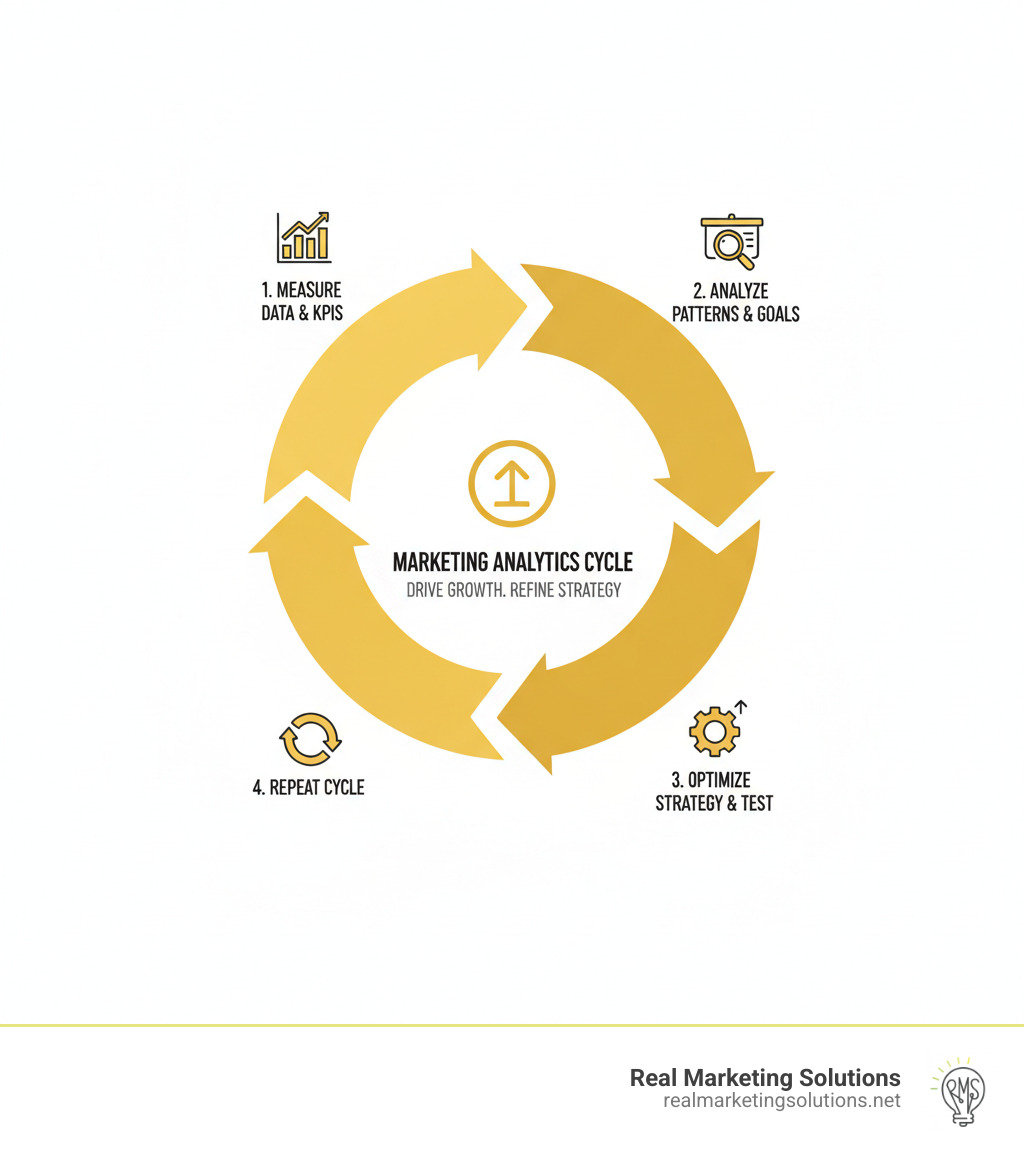
What is Marketing Performance Analytics and Why is it Crucial for Success?
Marketing performance analytics is the practice of measuring, managing, and analyzing your marketing data to maximize effectiveness and optimize your return on investment. Instead of guessing what works, you collect real data from your campaigns, interpret what it means, and use those insights to make smarter decisions. This data-driven strategy ensures every marketing dollar is pulling its weight, improving efficiency and financial performance.
The uncomfortable truth is that without analytics, marketers can’t understand the true value of their efforts. This is a critical gap, especially in competitive industries like mortgage, finance, and real estate, where every lead and conversion counts.
The Importance of Measuring Your Marketing Efforts
You can’t improve what you don’t measure. Collecting data on your customers reveals what drives their decisions, allowing you to create experiences that resonate. In fact, 78% of customers are more likely to purchase when they receive personalized offers—something analytics makes possible.
Measurement helps you:
- Understand your customers: Uncover their interests to build stronger connections.
- Optimize your marketing channels: Identify which channels drive results and which drain resources, so you can double down on what’s working.
- Allocate your budget effectively: Make strategic investments in high-ROI initiatives instead of guessing where to spend.
- Gain a competitive advantage: React faster and make smarter decisions than competitors who rely on gut feelings.
- Prove your marketing impact: Tie campaigns directly to business outcomes like revenue growth, lead generation, and customer acquisition.
Explore more insights in our resources on Marketing Analytics.
Connecting Marketing Efforts to Business Goals and ROI
Every marketing activity should serve your broader business objectives. Marketing performance analytics is the bridge that connects your campaigns to goals like revenue growth and profitability. By demonstrating value with concrete data—leads generated, revenue influenced, pipeline created—you transform marketing from a cost center into a business-critical function.
This evidence helps you justify marketing spend and build stronger alignment with leadership. When you can clearly articulate your contribution through data, leadership sees marketing not as an expense, but as a revenue driver that directly improves financial performance. Understanding and demonstrating ROI is paramount for any business, especially in competitive sectors like mortgage and real estate where every dollar counts.
The Core Components: Key Metrics and KPIs to Track
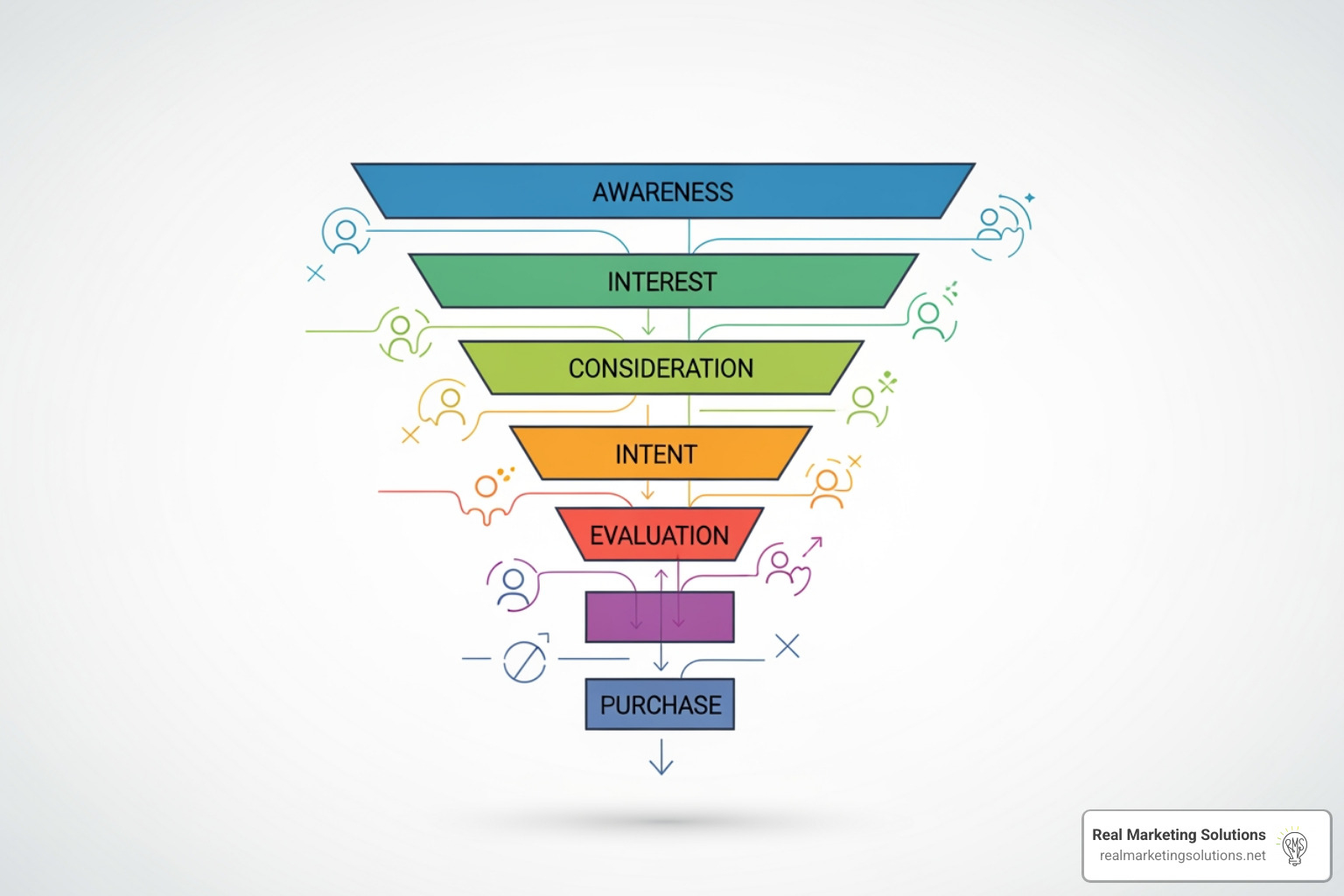
Only 23% of marketers are confident they track the right KPIs. This uncertainty leads to decisions based on misleading information. To avoid this, organize your Key Performance Indicators (KPIs) around the customer journey: Awareness, Consideration, and Conversion. This framework helps you understand what’s happening at each step and where you might be losing potential customers.
For a comprehensive guide on selecting these metrics, check out our Complete Guide to Setting Digital Marketing KPIs.
Awareness Stage Metrics
At the top of the funnel, the goal is getting noticed. These metrics measure your visibility.
- Impressions: The total number of times your content was displayed on a screen.
- Reach: The number of unique users who saw your content.
- Brand Mentions: Tracking what others are saying about your brand online.
- Share of Voice (SOV): How your brand’s visibility compares to your competitors.
Learn more about tracking Key Performance Indicators effectively.
Consideration & Engagement Metrics
Once you have their attention, you need to keep it. These metrics show if people are genuinely interested.
- Click-Through Rate (CTR): The percentage of people who click on your content after seeing it. A higher CTR indicates a resonant message.
- Cost Per Click (CPC): The amount you pay for each click on your paid ads, helping measure ad efficiency.
- Website Traffic & Time on Page: The number of visitors to your site and how long they stay, signaling genuine interest.
- Social Media Engagement: Likes, comments, shares, and saves that show your content is connecting with your audience.
- Email Open Rates: The percentage of recipients who open your emails, indicating effective subject lines.
Effective Social Media Analytics helps optimize engagement across all platforms.
Conversion & Revenue Metrics
These bottom-of-funnel metrics connect marketing efforts directly to business results.
- Conversion Rate: The percentage of users who take a desired action, like filling out a form or making a purchase.
- Customer Acquisition Cost (CAC): The total cost to acquire a new customer. Keeping CAC low is essential for sustainable growth.
- Return on Investment (ROI): The ultimate profitability metric, showing whether your marketing generates more revenue than it costs.
- Customer Lifetime Value (CLV): The total predicted revenue a customer will generate over their entire relationship with your business. This is invaluable for understanding long-term health, especially in relationship-driven industries like mortgage and real estate.
Focusing on these Conversion Rates and revenue metrics provides the clarity needed to make smart marketing investments and drive real growth.
A Practical Guide to Implementing Marketing Performance Analytics
Implementing marketing performance analytics is a systematic process that pays dividends. It involves setting up a solid foundation, collecting the right data, analyzing it, and using the insights to optimize your strategies. It’s a continuous loop of improvement that makes your marketing smarter and more effective.

The goal is to turn raw data into actionable insights for better, faster decision-making. For a deeper look, read our guide on How to Measure Success with Marketing Analytics.
Setting Up Your Marketing Performance Analytics Program
Building a structured program requires a solid foundation. Follow these key steps:
- Define Clear Goals: Know what success looks like. Use SMART (Specific, Measurable, Achievable, Relevant, Time-bound) goals to guide your efforts.
- Choose Your KPIs: Select KPIs that align with your goals for each stage of the customer journey.
- Select Your Tools: Choose integrated technology (web analytics, CRM, etc.) to collect, store, and analyze your data.
- Establish a Baseline: Measure your current performance to create a benchmark for future improvements.
- Create Dashboards: Visualize key data in an easy-to-understand format to monitor performance and spot trends at a glance.
A solid Digital Marketing Strategy is the backbone of this setup.
Applying Analytics Across Key Marketing Channels
To get a holistic view, apply analytics across every channel. Each one tells part of the story.
- Social Media: Track engagement, reach, and conversions to understand what content resonates with your target audience.
- Email Campaigns: Analyze open rates, click-through rates, and conversions to refine content and segmentation.
- Paid Advertising: Monitor CTR, CPC, and return on ad spend to optimize creatives, targeting, and budget allocation.
- SEO and Content: Track organic traffic, keyword rankings, and user behavior to ensure your content is performing and driving conversions. Our expertise in helping clients Improve Search Performance is built on this analytical approach.
By analyzing channels individually and together, you can allocate resources for the greatest impact.
Turning Data into Actionable Insights for Your Strategy
Data without action is just noise. Turn your data into insights that improve your Marketing Strategy.
- Identify Trends: Analyze data over time to spot patterns and seasonal opportunities.
- Segment Customers: Group customers by behavior or demographics for highly targeted campaigns.
- Use A/B Testing: Test different versions of headlines, images, or calls-to-action to determine what performs best.
- Find Personalization Opportunities: Use behavioral data to personalize marketing messages and offers.
- Reallocate Budget Strategically: Shift budget from underperforming channels to those with a proven higher ROI, ensuring your marketing spend is always optimized.
Overcoming Challenges and Embracing the Future of Analytics
Implementing marketing performance analytics has its challenges, but they are manageable. Exciting technologies like AI are also making analytics more powerful and accessible than ever before. Staying ahead means keeping up with trends.

Common Challenges and How to Overcome Them
Most businesses face similar roadblocks. Here’s how to tackle them:
- Data Silos: When data is scattered across platforms, use integration tools to create a single source of truth for all your Digital Marketing Data.
- Poor Data Quality: Inaccurate data leads to flawed insights. Implement regular audits and automated data validation to ensure your data is clean.
- Lack of Expertise: Interpreting complex data requires skill. Invest in training or partner with specialists who can translate data into clear action steps.
- Measuring Across Channels: Customers interact with your brand multiple times. Use multi-touch attribution models to assign value to each touchpoint in the customer journey.
- Proving ROI: In industries with long sales cycles like real estate, connecting spend to revenue is tough. Use robust attribution models and incrementality testing to demonstrate marketing’s true impact.
The Impact of AI and Machine Learning on Marketing Performance Analytics
AI and Machine Learning are fundamentally changing analytics by uncovering insights at an unprecedented speed.
- Predictive Analytics: AI can forecast future trends, customer churn, and which leads are most likely to convert.
- Automated Insights: AI-driven platforms automatically sift through data to surface key patterns and anomalies.
- Improved Personalization: Machine Learning analyzes customer data to deliver hyper-personalized content and offers at scale.
- Generative AI for Analysis: New tools can summarize complex reports in plain language and suggest optimization steps.
- Efficiency Gains: AI-infused marketing leads to faster analysis, smarter targeting, and better ROI, making it an essential part of modern Marketing Trends.
Essential Tools and Technologies for Effective Analysis
An effective analytics program requires the right technology stack.
- Web Analytics Platforms: These are the foundation for tracking website traffic and user behavior, providing essential data on how visitors interact with your site.
- CRM Systems: These platforms manage the full customer lifecycle, providing invaluable insights into customer journeys.
- Social Media Analytics Tools: Specialized tools offer deep audience insights, competitor benchmarking, and performance tracking.
- Email Marketing Software: Modern platforms provide detailed data on subscriber behavior to help refine and optimize campaigns.
- Data Visualization Tools: These tools create interactive dashboards that transform complex data into clear, actionable visual stories.
Frequently Asked Questions about Marketing Performance Analytics
Even with a deep dive into the topic, some questions often come up. Here are concise answers to the most common ones we hear.
What is the difference between marketing analytics and marketing performance analytics?
Think of it this way: marketing analytics is the broad practice of studying all your marketing data to see what’s happening. Marketing performance analytics is more focused, measuring your results against specific goals to tell you how well it’s happening and if it’s driving ROI. It’s about proving impact and optimizing strategy.
How do you measure the success of a marketing campaign?
Success measurement starts before you launch. First, define clear campaign goals. Then, select Key Performance Indicators (KPIs) that align with those goals. For awareness, you might track impressions and reach. For engagement, you’d look at click-through rates (CTR). For conversions, you’d measure leads or sales.
The ultimate measure of success is Return on Investment (ROI). Did the campaign generate more value than it cost? Tying all your KPIs back to ROI provides the definitive answer.
What is the difference between ROI and ROAS?
Both are crucial profitability metrics, but they measure different things.
ROAS (Return on Ad Spend) is a simple metric that measures the gross revenue generated for every dollar spent on advertising. If you spend $100 on ads and get $500 in revenue, your ROAS is 5:1. It’s great for gauging ad campaign efficiency.
ROI (Return on Investment) provides the bigger picture. It measures the total profit from your marketing investment after accounting for all costs—including ad spend, labor, software, and creative. ROI gives you a more accurate view of whether your overall marketing effort is truly profitable.
Drive Real Results with a Data-First Marketing Strategy
If there’s one takeaway, it’s this: marketing performance analytics turns numbers into measurable business growth. A data-first approach means you stop guessing and start knowing what customers want, where your budget works hardest, and how every campaign impacts the bottom line. This creates a continuous improvement loop where every insight makes your next campaign even better.
Implementing effective analytics takes expertise, the right tools, and strategic thinking. That’s where having the right partner makes all the difference.
At Real Marketing Solutions, we specialize in helping businesses—especially in the mortgage, finance, and real estate industries—harness the power of analytics to drive tangible results. Our team of specialists offers lead generation, SEO, social media management, content creation, email marketing, and workflow automation, all grounded in a strategy to deliver measurable outcomes.
We work with small businesses, corporate marketing teams, and government agencies, building personalized strategies for each client. Real Marketing Solutions proudly serves businesses in Napa Valley, California, Tacoma, WA, Oregon, and across the USA. Our approach helps businesses in these communities achieve measurable growth and maximize ROI.
Ready to stop wondering if your marketing is working and start knowing it is? Let’s talk about how a data-driven strategy can transform your business.
Contact us for a complimentary consultation for your marketing strategy
Subscribe to the Social Scoop
Receive regular news & updates in the world of social media marketing.
COMPANY ACCOLADES


Follow Us


