


A Complete Guide for Digital Marketing Success
Digital marketing is no longer a “nice to have” for small businesses it is essential.
Digital marketing for small business is the use of online channels such as websites, search engines, social media, and email to promote your services, reach your ideal audience, and grow your revenue. For service-based businesses, it’s how customers find you, evaluate you, and ultimately decide to work with you.
Your audience is already online. Nearly 80% of Americans use social media, and a significant portion of searches are focused on local businesses. If your business is not showing up consistently and strategically, you are missing opportunities every day.
This guide will walk you through how small business marketing works today, what actually drives results, and how to build a strategy that supports long-term growth.
What Is Digital Marketing for Small Business?
At its core, digital marketing is about visibility, trust, and conversion.
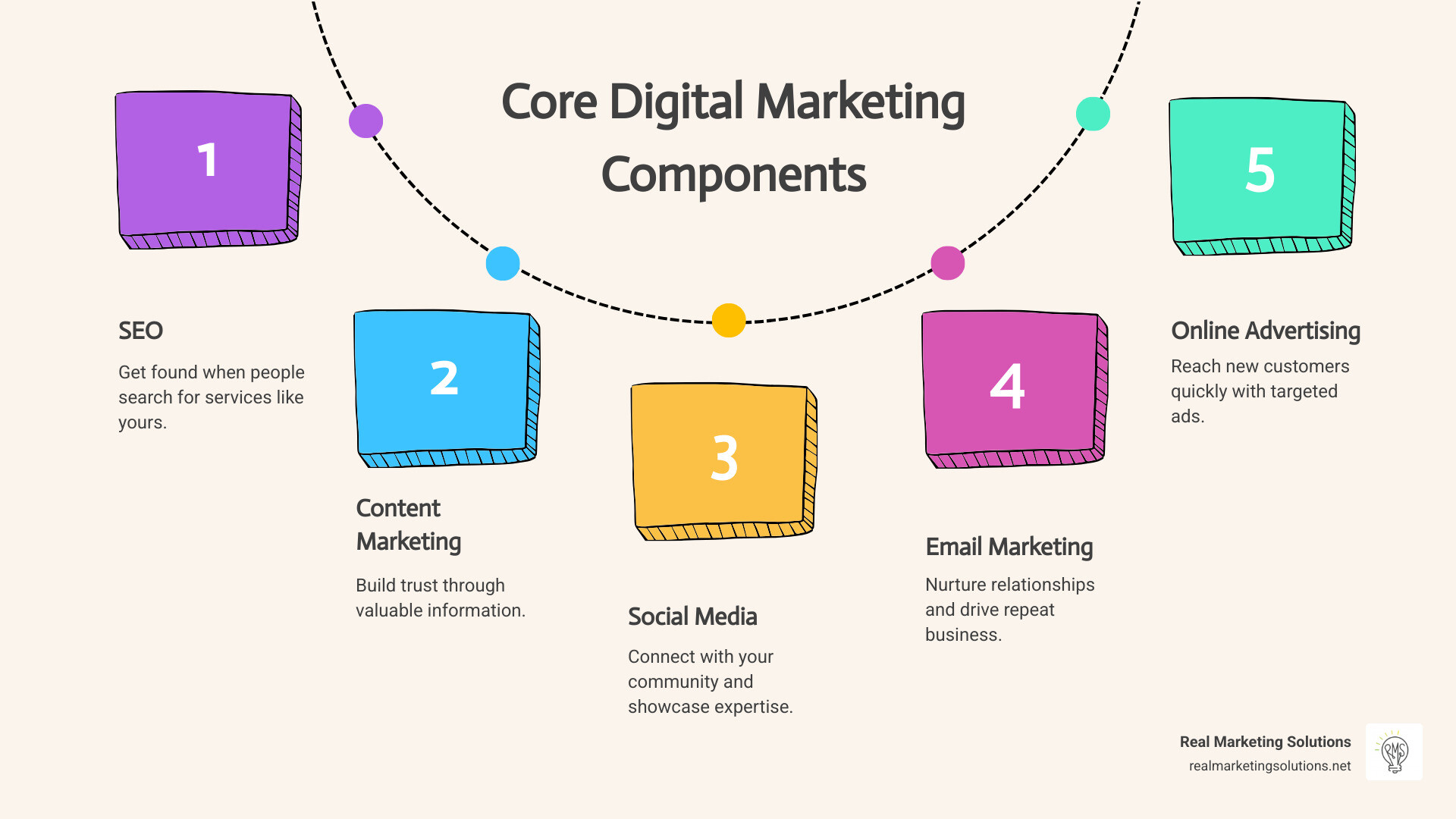
The most effective strategies combine five key components:
- Search engine optimization (SEO): Helps your business appear when customers search for your services.
- Content marketing: Builds authority and trust through valuable information.
- Social media marketing: Connects you with your audience and increases visibility.
- Email marketing: Nurtures relationships and drives repeat business.
- Online advertising: Generates immediate traffic and leads through targeted campaigns.
Each of these channels plays a role in helping your business attract, engage, and convert customers. The goal is not to use everything at once. Instead, focus on using the right combination strategically.
Why Digital Marketing Matters More Than Ever
Digital marketing levels the playing field for small businesses. Unlike traditional marketing, it allows you to:
- Reach a highly targeted audience
- Track performance in real time
- Adjust your strategy based on data
- Compete without a massive budget
It also directly impacts profitability. Research consistently shows that it costs significantly more to acquire a new customer than to retain an existing one. Digital marketing supports both by bringing in new leads and nurturing long-term relationships.
For industries like mortgage, real estate, and professional services, this is especially important. Your clients are researching online before they ever reach out. The question is whether they find you—or your competitor.
Building a Strong Digital Marketing Foundation
One of the most common mistakes small businesses make is jumping into tactics without a clear strategy. A strong foundation starts with clarity.
Define Your Goals
Your goals should be specific and measurable. Instead of “Get more customers,” focus on outcomes like increasing website leads or growing your email list within a defined timeframe.
Understand Your Audience
Who are you trying to reach? What challenges are they facing? Where do they spend their time online? The more clearly you understand your audience, the more effective your messaging becomes.
Establish Your Brand
Your brand is not just your logo it is how your business is perceived. A strong brand builds trust, creates consistency, and helps you stand out in a crowded market.
Optimize Your Website
Your website is your digital storefront. It should clearly communicate what you do, who you help, and how to take the next step. It also needs to be mobile-friendly and designed to convert visitors into leads.
Balance Your Marketing Efforts
Paid advertising can drive immediate results, while organic strategies like SEO, AEO (answer engine optimization), and content marketing build long-term growth. The most effective strategies use all three.
oth.
How to Start Digital Marketing from Scratch
IIf your business does not yet have a strong online presence, the key is to start simple and build consistently. Begin with these foundational steps:
- Claim and optimize your local business listing so customers can find you in search results.
- Set up one or two social media platforms where your audience is most active.
- Create a simple, professional website that clearly explains your services.
- Use existing assets like testimonials and service descriptions to build credibility.
You don’t need to do everything at once. Focus on a few high-impact actions, and expand as you gain momentum.
Driving Visibility Through SEO and Content Marketing
Once your foundation is in place, the next step is visibility.
Search engine optimization (SEO) and content marketing work together to bring qualified visitors to your website. SEO helps your business appear in search results, while content helps build trust and convert visitors into leads.
When someone searches for a service like “mortgage broker near me,” SEO determines whether your business shows up. Content determines whether they choose you.
Creating valuable, relevant content positions your business as a trusted resource. This not only improves search rankings but also demonstrates experience, expertise, and credibility. These are factors that both search engines and customers value.
The Importance of Local SEO
For service-based small businesses, local SEO is one of the most powerful strategies available.
Many online searches are local, meaning users are actively looking for businesses in their area. These are high-intent searches people are ready to take action.
To improve your local visibility:
- Ensure your business information is accurate and consistent across all platforms
- Optimize your business profile with services, photos, and hours
- Encourage satisfied clients to leave reviews
- Respond to reviews professionally and consistently
A strong local presence increases your chances of being found and chosen.
Creating Content That Converts
Getting traffic to your website is only part of the equation. Your content must also convert visitors into leads.
Start by focusing on the specific questions your audience is asking. Instead of broad topics, use targeted phrases that reflect real search behavior.
Effective content strategies include:
- Educational blog posts that answer common questions
- Short-form video content that explains processes or concepts
- Clear calls to action that guide the next step
The most successful content aligns with search intent. When your content directly answers what someone is looking for, it builds trust and increases conversions.

Building Relationships Through Social Media and Email
Visibility brings people in, but relationships drive long-term growth.
Social media allows your business to show up consistently, share insights, and connect with your audience on a personal level. It helps humanize your brand and build familiarity over time.
Email marketing provides a direct line of communication. Unlike social platforms, your email list is something you own. It allows you to nurture leads, stay top of mind, and drive repeat business.
The most effective marketing plan combines both of these strategies. Use social media to grow your audience, and then move those connections to your email list to build deeper relationships.
Choosing the Right Platforms
You don’t need to be everywhere. You need to be where your audience is.
- Facebook works well for local engagement and community-building.
- Instagram is ideal for visual industries like real estate.
- LinkedIn is valuable for professional networking and partnerships.
- TikTok offers strong reach and discovery, especially with video.
Focus on one or two platforms first. Consistency and quality matter more than trying to maintain a presence everywhere.
Accelerating Growth: Advertising and Customer Loyalty
While organic strategies take time, online advertising can accelerate results.
Digital ads allow you to target specific audiences based on location, interests, and behavior. This precision helps ensure that your message reaches the right people at the right time.
When executed correctly, advertising becomes a predictable way to generate leads and scale your business. The key is to test, measure, and optimize continuously.
Why Customer Retention Matters
Growth is not just about acquiring new customers. It’s about keeping the ones you already have.
Loyal customers are more likely to return, refer others, and spend more over time. Even small improvements in retention can significantly impact profitability.
Simple strategies like follow-up emails, exclusive offers, and requesting reviews can strengthen relationships and increase lifetime value.
Measuring What Matters
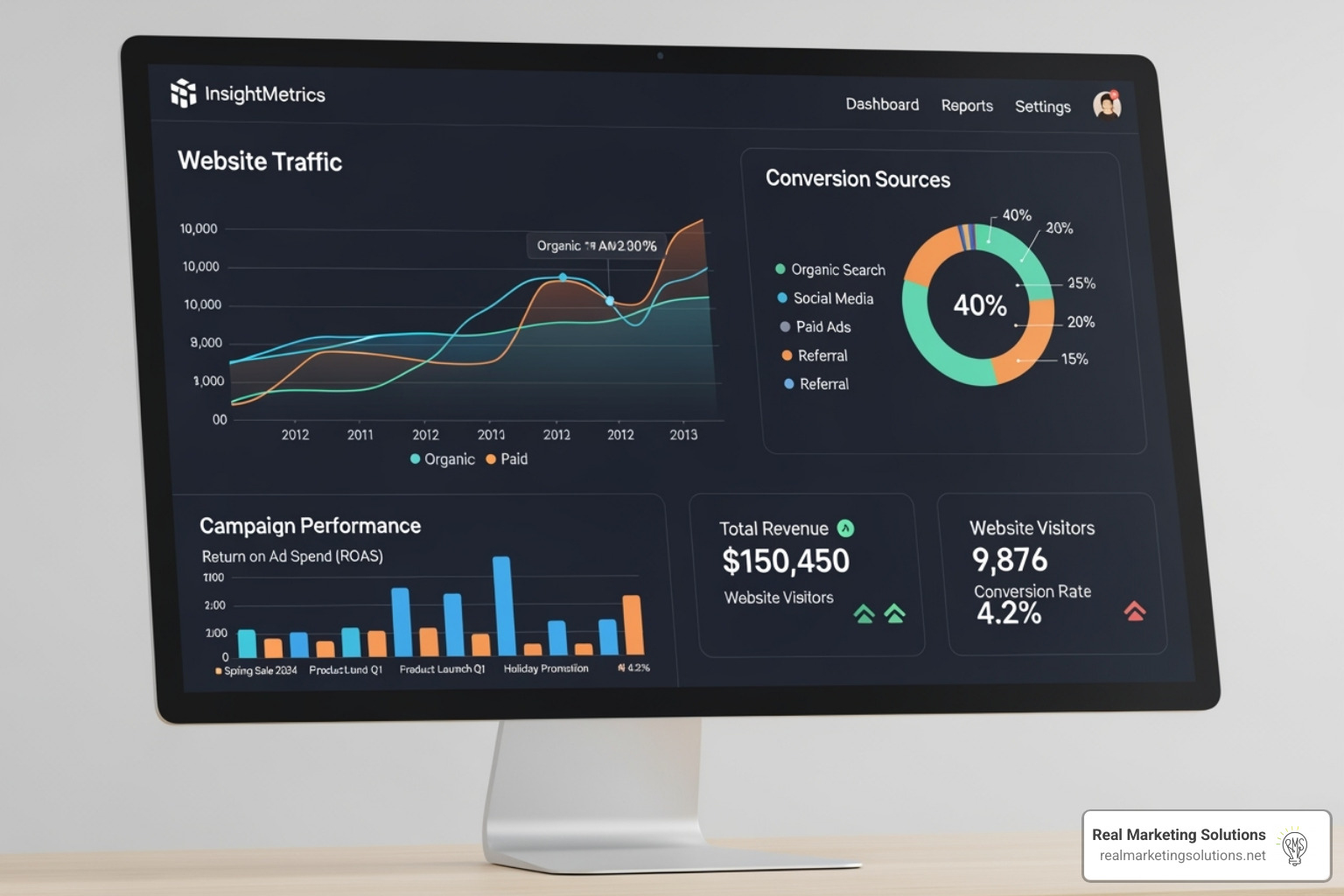
One of the biggest advantages of digital marketing is its measurability. Instead of guessing, you can track exactly what’s working.
Key metrics to monitor include:
- Website traffic
- Conversion rates
- Cost per acquisition
- Return on investment
- Engagement across platforms
Tracking these metrics allows you to refine your strategy and focus on what drives results.
Overcoming Common Challenges
Many small businesses feel overwhelmed by digital marketing and that is completely normal.
Common challenges include:
- Limited time
- Tight budgets
- Lack of in-house expertise
The solution is not to do more, it is to do what matters most.
Start with high-impact activities, use automation where possible, and consider partnering with experts when needed. The right strategy simplifies the process and creates clarity.
Frequently Asked Questions
How much should a small business spend on digital marketing?
Budgets vary depending on your goals and industry. Rather than focusing on a percentage, focus on return on investment. Start with organic strategies and test a manageable ad budget, and then scale what works.
Which digital marketing channel is best for beginners?
The best channel depends on your audience. For local businesses, optimizing your business listing is often the most effective first step. From there, choose one platform and build consistency.
How long does it take to see results?
Paid advertising can generate results quickly, while SEO and content marketing take time, often several months. The key is consistency and ongoing optimization.
Building a Strategy That Drives Growth
Digital marketing is not a trend. It’s the foundation of modern business growth.
The businesses that succeed are the ones that show up consistently, provide value, and adapt to how customers search and engage today. A strong digital marketing strategy creates visibility, builds trust, and drives measurable results over time.
At Real Marketing Solutions, we help small businesses develop and execute strategies that align with their goals without the overwhelm.
Subscribe to the Social Scoop
Receive regular news & updates in the world of social media marketing.
COMPANY ACCOLADES


Follow Us


